![[headshot] image of customer (for a modern restaurant)](https://cdn.prod.website-files.com/69654cf02f2cae51edaa67f1/69bd8eff48a4bae194ee4d55_renewmind.jpg)

Have you ever wanted to change something about your life—maybe break a habit, start a healthier routine, set boundaries, or finally deal with something that’s been weighing on you—but found yourself stuck? Maybe you’ve had thoughts like: “I know what I should do… so why can’t I just do it?” Or you’ve made progress for a while, only to fall back into old patterns and feel like you're starting all over again. If that sounds familiar, you're not alone. Change is rarely a straight line—and it's not because you're lazy, unmotivated, or broken. It's because human behavior is complex, and change is a process, not a flip of a switch. In fact, psychology tells us that people don’t usually change overnight—even when they want to. That’s because our habits, behaviors, and coping mechanisms often serve deeper roles, even the unhelpful ones. They may help us feel safe, cope with stress, or avoid discomfort. Change also takes emotional readiness, not just information or intention. You can know that something isn’t working, and still not feel ready to act on it yet. That doesn’t mean you’re failing—it means you’re human. And when you understand the Stages of Change, it becomes easier to give yourself grace and move forward with clarity.
The Stages of Change
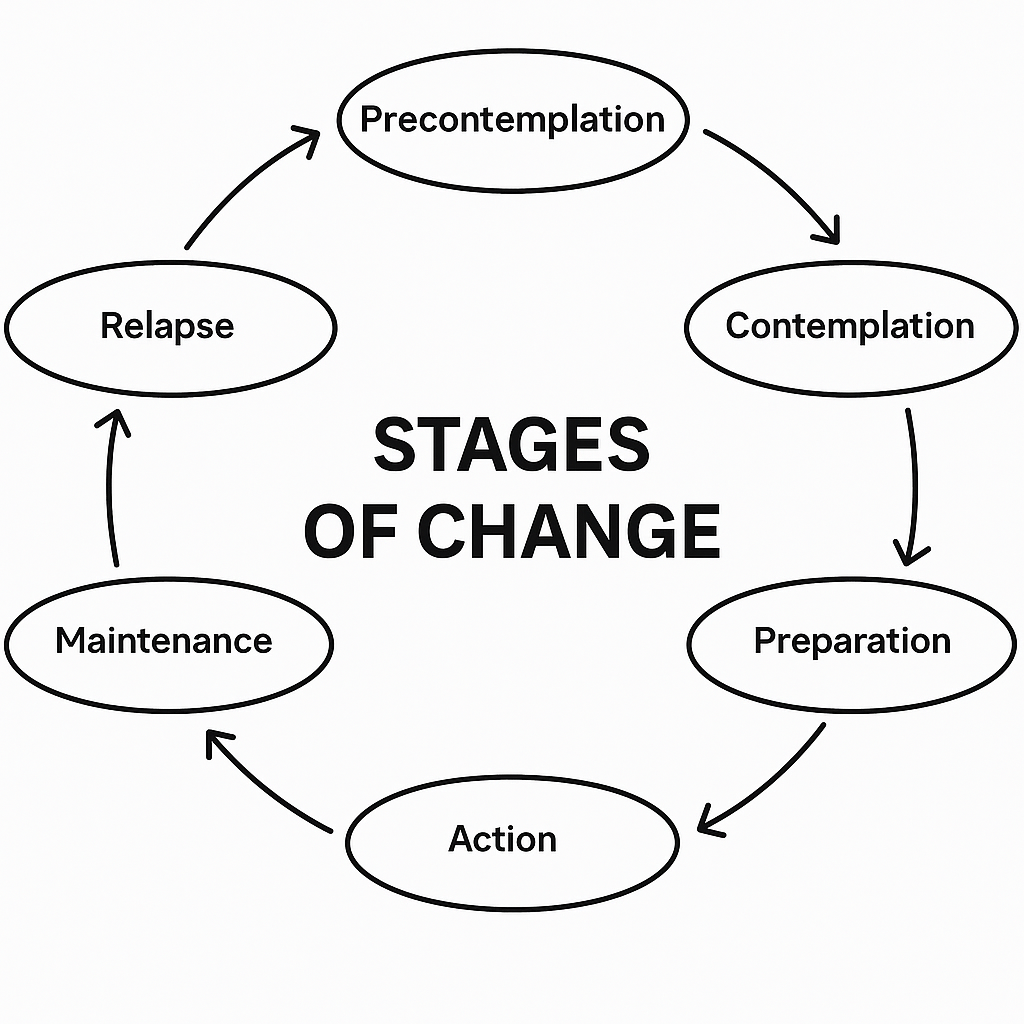
Below is an image showing the six common stages people go through in the process of meaningful change. While it might look like a clean cycle, the process is often messy, with progress, setbacks, and loops along the way—and that’s normal.
Breaking Down Each Stage
1. Precontemplation Stage: At this stage, a person isn’t yet thinking seriously about change. They may not see the behavior as a problem, or they may feel hopeless about changing it. Others might see the issue clearly, but to the person, it’s not yet on the radar. Common thoughts you may have if you are in this stage: “It’s just how I am. I’ve tried before, and it didn’t work. It’s not that big of a deal.”
2. Contemplation Stage: Here, awareness starts to grow. You may begin to weigh the pros and cons, noticing the cost of staying the same—but you’re not ready to act just yet. This is a vital stage where ambivalence is normal. Common thoughts you may have if you are in this stage: “I know this isn’t good for me. Part of me wants to change, but part of me is unsure. I’ll think about it more soon.”
3. Preparation Stage: You’ve decided to change and are starting to make a plan. You might research options, gather support, or set a date to begin. It’s still early, but you’re beginning to build momentum. Common thoughts you may have if you are in this stage: “I’m getting ready to do it. I need a plan. I’m going to talk to someone about this. I’m making space in my life for this.”
4. Action Stage: Now you’re actively making changes—setting boundaries, quitting a habit, establishing a new routine. This stage requires focus, effort, and often external support. It’s also the most vulnerable to setbacks. Common thoughts you may have if you are in this stage: “This is hard, but I’m doing it. I’m starting to see progress.”
5. Maintenance Stage: The new behavior is becoming more routine. You're learning how to keep going when motivation dips. Common thoughts you may have if you are in this stage: “This feels more natural now. I still have to be intentional, but it’s getting easier.”
6. Relapse Stage: Relapse isn’t a failure—it’s a normal part of the change process. Many people cycle through the stages multiple times before lasting change takes hold. What matters is how you respond. Support and self-compassion are key here, because lasting change takes time. Reflection and recommitment can help you re-enter the cycle stronger and wiser. Common thoughts: “I messed up, now what?”
Why This Matters
Understanding the stages of change helps you see your journey with more honesty, compassion, and patience. Instead of beating yourself up for not being “there” yet, you can recognize exactly where you are—and what kind of support or mindset shift might help you move forward. It gives language to the in-between places where most people get stuck, and it reminds you that hesitation, relapse, and slow progress aren’t signs of failure—they’re part of being human. When you know the stages, you stop expecting instant transformation and start respecting the process. And that shift alone can help you stay engaged instead of giving up.
Final Thoughts
If you’ve ever wondered why change feels so hard—or why it takes so long—remember this: change isn’t about flipping a switch; it’s about moving through stages. Sometimes you take two steps forward and one step back. Sometimes you loop around the same stage a few times before moving ahead. That doesn’t mean you’re failing—it means you’re learning. Whether you’re just starting to consider a change or deep in the middle of taking action, each stage has value. Be kind to yourself in the process. Growth takes time, and every step—even the backward ones—can move you forward when you use them as learning opportunities. You don’t have to do it all today. But you can take the next right step. And when you're ready, that step will matter more than you know.