
![[headshot] image of customer (for a modern restaurant)](https://cdn.prod.website-files.com/69654cf02f2cae51edaa67f1/69bd8eff48a4bae194ee4d55_renewmind.jpg)

Emotions might feel random, but they’re not—they’re your brain and body’s way of sending important messages. Whether it’s joy, frustration, or anxiety, every emotion you feel is tied to what you value, believe, or how you're interpreting a situation. Most people experience over 400 emotional moments a day. Some are obvious, others subtle, but all of them shape your choices, reactions, and relationships. These micro-moments guide your focus, influence your behavior, and affect how meaningful life feels. The problem? Most of us were never taught how emotions actually work or how to manage them in healthy ways. Emotions aren’t just “feelings”—they’re automatic responses triggered by your thoughts and followed by chemical reactions in your body. They create real physical sensations and serve a purpose, even if it’s not immediately clear. Think of emotions as your internal GPS: they help you spot what matters, sense when something’s off, and figure out how to respond. When you understand what your emotions are trying to say, you gain clarity, control, and confidence to navigate life more intentionally.
Identifying and Labeling Emotions
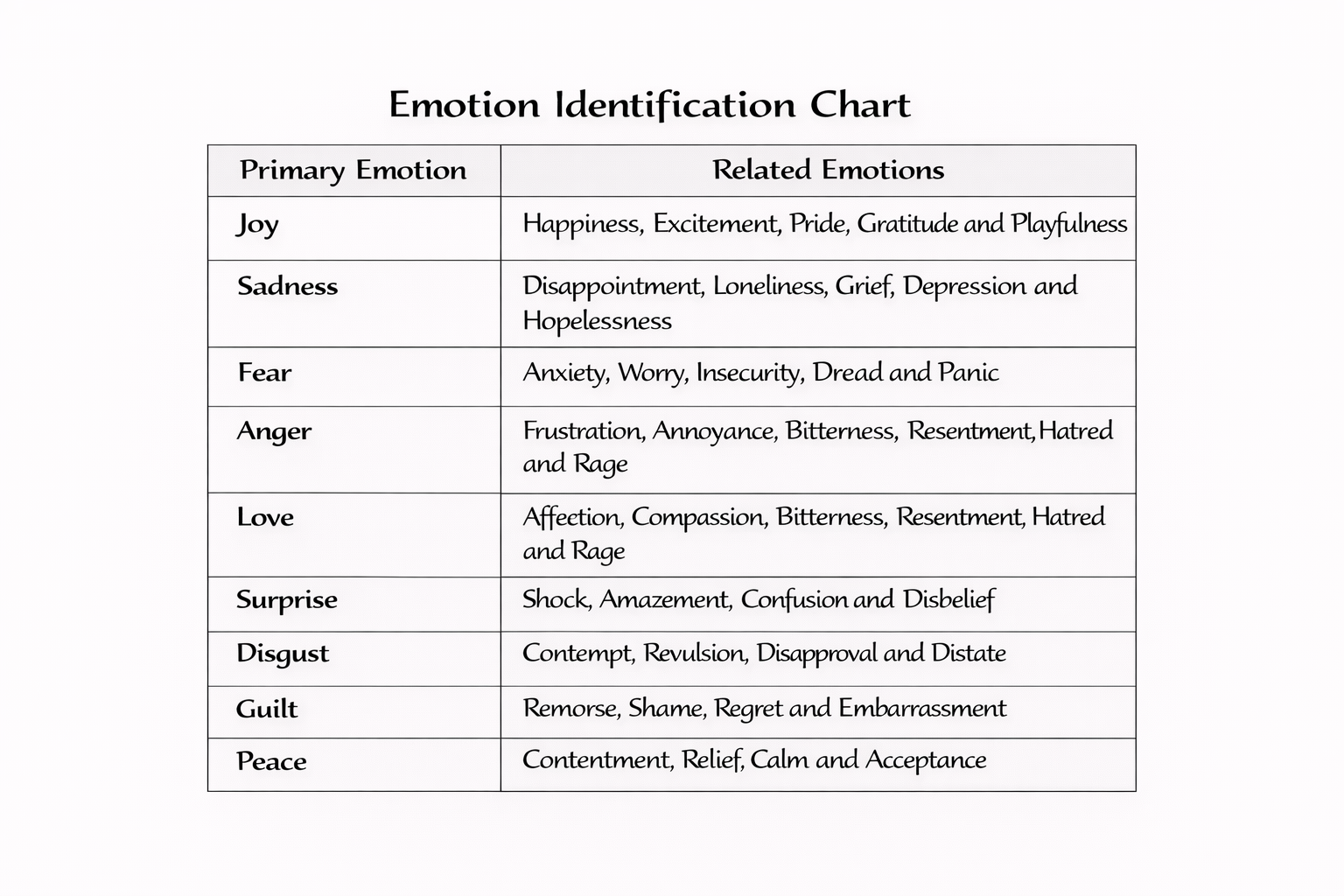
A key to emotional wellness is being able to recognize and name what you’re feeling. Many people lump everything into “stressed” or “upset,” without realizing it could actually be disappointment, shame, or something else entirely. But if you can’t name an emotion, it’s harder to respond to it in a helpful way. Research shows that naming your emotions reduces their intensity and helps you handle them better. Use the chart below to identify what you’re feeling more accurately.
Situations Don’t Cause Emotions, Thoughts Do
It may feel like traffic causes frustration or a compliment causes happiness, but really, it’s your thoughts about the situation that create the emotion. Multiple people can go through the same event and feel completely different emotions based on how they interpret it. Here is an example of that:

Why Do I Feel This Way?
Sometimes emotions hit and you’re not even sure why. That’s because they’re often driven by automatic or subconscious thoughts. To figure it out, try asking yourself: “What was I thinking right before I felt this way?” If nothing comes to mind, use this cheat sheet to investigate:

Coping with Unpleasant Emotions
When emotions get intense or unpleasant, many people try to push them down or distract themselves. But true emotional health means learning how to face them, not just escape them. Coping well is a skill—and like any skill, it can be learned. Check out the "Calming Your Brain," "Building an Elite Mindset," and "Optimizing Your Behaviors," sections of this blog for practical tools to help you work through those tough moments with strength and self-awareness.
The Impact of Brain & Body Chemistry
Your emotional state isn’t just shaped by thoughts—it’s also affected by your brain and body chemistry. If you feel persistently anxious, numb, reactive, or low, something deeper might be going on physically. Emotional imbalances can be caused by things like:
- Lifestyle Factors: Poor sleep, diet, alcohol, drug use, lack of exercise, isolation, or missing nutrients.
- Body Factors: Blood sugar issues, hormonal imbalances, thyroid problems, inflammation, gut issues, or other medical conditions.
- Brain Factors: Imbalanced neurotransmitters (dopamine, serotonin, etc.), brain injury, genetics, or chronic stress.
If this sounds like you, it’s worth talking to a doctor, psychiatrist, or functional medicine provider. You can also start improving your brain health naturally by following the strategies in the "Enhancing Your Brain Chemistry," section of this toolkit.
Final Thoughts
Emotions shape everything—your mood, decisions, relationships, and the way you experience life. The more you understand how emotions work, what causes them, and how to manage them, the more emotionally resilient and empowered you become. These aren’t just feel-good ideas—they’re life-changing skills. Start practicing them today, and you’ll start feeling the difference in every area of your life.