
![[headshot] image of customer (for a modern restaurant)](https://cdn.prod.website-files.com/69654cf02f2cae51edaa67f1/69bd8eff48a4bae194ee4d55_renewmind.jpg)

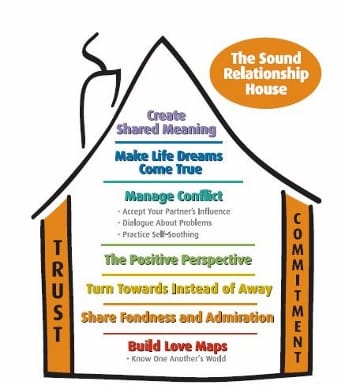
In his best-selling book The Seven Principles for Making Marriage Work, Dr. John Gottman introduced a powerful metaphor for a strong, lasting relationship: a house. Like a well-built home, a healthy partnership has solid structural elements and layers that couples construct together over time. He named this model the Sound Relationship House, and for over two decades, it has served as a guide for couples seeking to build fulfilling, resilient relationships. So, what exactly is the Sound Relationship House? Here’s a breakdown of each level:
Foundation: Love Maps
At the base of the house is a deep understanding of each other’s inner worlds. This is where partners create what Gottman calls a “Love Map”—an intimate knowledge of each other’s likes, dislikes, hopes, fears, and daily experiences. Knowing the small and big details—like your partner’s favorite way to relax or who they confide in—helps build a strong emotional connection. Ideally, you should know your partner better than anyone else does.
Second Floor: Fondness and Admiration
Healthy relationships thrive when appreciation is openly expressed. This level emphasizes the importance of communicating what you admire and value in your partner. Whether it’s their sense of humor or their compassion, regularly expressing genuine praise fosters a climate of mutual respect and affection.
Third Floor: Turning Toward Instead of Away
In daily life, partners make what the Gottmans call “bids” for connection—these can be verbal or nonverbal cues seeking attention, support, or affection. A strong relationship is built when both people respond to these bids in positive, supportive ways. Ignoring or reacting negatively to these moments can create distance, while turning toward each other strengthens emotional intimacy.
Fourth Floor: The Positive Perspective
This level is all about how couples interpret each other’s actions and intentions. In healthy relationships, partners are more likely to give each other the benefit of the doubt. Instead of assuming the worst, they believe in each other’s goodwill. This optimistic outlook helps de-escalate tension and promotes a sense of unity.
Fifth Floor: Managing Conflict Effectively
Disagreements are inevitable, but how couples handle them makes all the difference. Effective conflict management starts with being open to your partner’s input. It involves recognizing whether an issue is solvable or something to navigate repeatedly, and learning to talk about it without escalating. When emotions run high, using calming strategies like deep breathing or taking a short break can help restore balance.
Sixth Floor: Supporting Each Other’s Dreams
A strong relationship supports individual goals and aspirations. This part of the house reflects how partners help each other grow—whether that means pursuing a new career, going back to school, or working toward financial goals together. Encouragement and collaboration show a shared investment in each other’s happiness and future.
Seventh Floor: Creating Shared Meaning
At the top of the house is a sense of shared identity and purpose. This includes rituals, traditions, and symbols that define who you are as a couple. Whether it’s a weekly pizza night or unique birthday traditions, these shared experiences help build a life story that belongs to both of you.
The Pillars: Trust and Commitment
All of these elements are held together by the crucial supports of trust and commitment. These pillars reflect a conscious choice to believe in each other and to stay loyal through life’s ups and downs. Trust and commitment form the emotional scaffolding that holds the entire house together, allowing love to flourish over time.
Final Thoughts
In conclusion, the Sound Relationship House offers a clear and practical framework for building and maintaining a strong, enduring partnership. Each level—from understanding each other’s inner worlds to creating shared meaning—adds essential layers of emotional intimacy, respect, and mutual support. Grounded in the pillars of trust and commitment, this model reminds us that great relationships aren’t built overnight—they’re constructed moment by moment through care, communication, and connection. By intentionally cultivating each floor of this “house,” couples can create a relationship that not only survives challenges but thrives in the face of them.