![[headshot] image of customer (for a modern restaurant)](https://cdn.prod.website-files.com/69654cf02f2cae51edaa67f1/69bd8eff48a4bae194ee4d55_renewmind.jpg)

Have you ever felt overwhelmed by the idea of saving for retirement? Maybe you’ve wondered, Am I behind? Is it too late to start? Do I need to hire an expert or understand the stock market to build a decent retirement fund? If so, you’re not alone. For a lot of people, the topic of retirement investing feels intimidating, complicated, and out of reach. The good news is—you don’t need a finance degree or a complex investment strategy to retire with dignity. In fact, simple, consistent investing over time is one of the most effective ways to build wealth for your future. Let’s break it down in a way that makes sense and show you how you can start preparing for the future today.
Consistency Over Complexity
A common myth is that the more complicated an investment strategy is, the more money it will make you. The truth is, you don’t need risky, confusing, or trendy investments to succeed. What you really need is a solid financial foundation and a clear, consistent plan. Before you start investing, it’s smart to follow a proven order:
- Get out of debt (except your mortgage)
- Save a fully funded emergency fund of 3–6 months of expenses
This keeps you from having to dip into your retirement investments for unexpected emergencies or lingering debt payments—both of which can sabotage your long-term progress.
A Simple, Proven Investment Plan
Once you’re financially ready, start investing 15% of your gross income for retirement. Here’s a simple plan to follow:
- Employer Match: If your employer offers a 401(k), 403(b), or TSP match, invest up to the match first—it’s free money!
- Fully Fund Roth: Next, fully fund a Roth IRA (if eligible) for you and your spouse.
- Invest 15%: If you haven’t hit 15% yet, continue investing in your employer plan until you do.
After your employer match, invest the rest in a Roth IRA and back into your 401(k) if needed.
The Power of Compound Interest
Let’s compare Ethan and Caleb—two regular guys who both invested in good growth stock mutual funds averaging 11% annual return.
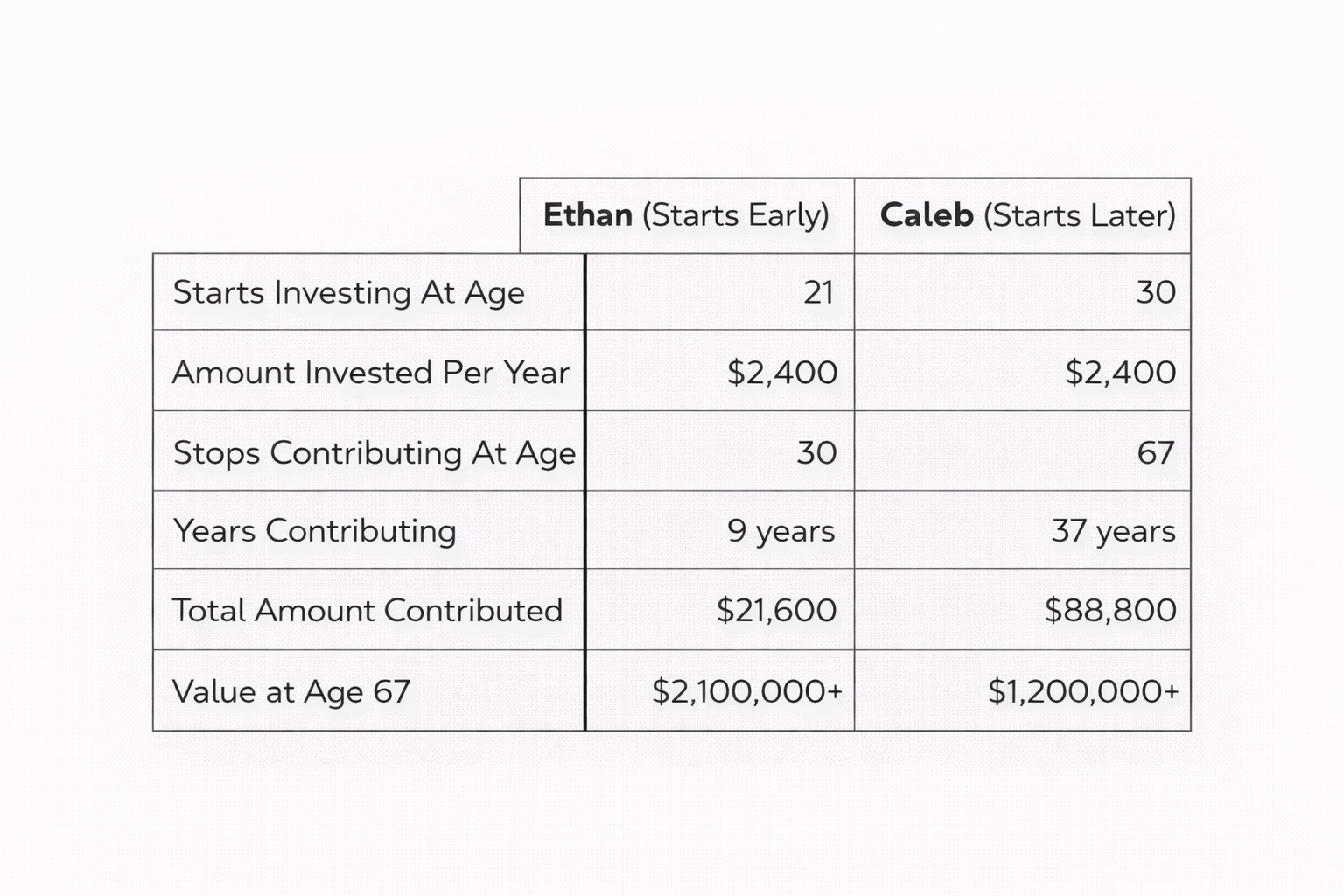
Even though Ethan stopped contributing after just 9 years, his money had more time to grow, and thanks to compound interest, it outpaced Caleb’s 37 years of steady investing by nearly $900,000. Time in the market beats timing the market. Start early when you can—the difference is life-changing.
Long-Term Investing Mindset
It’s important to remember—your retirement investments are meant for retirement. That means no borrowing against your 401(k), no cashing out early, and no jumping in and out of the market when it gets rocky. Why? Because:
- Investing Longer: The longer your money stays invested, the more it can grow. The stock market’s historical average return is around 10–12% per year over the long term.
- Avoid Early Withdrawals: Early withdrawals come with steep penalties and taxes. You’ll lose a chunk of your savings before you even get to use it.
And if you change jobs? Always roll your 401(k) into a rollover IRA to keep your investments growing without penalties or tax surprises.
Conclusion
You don’t need complicated investment strategies or Wall Street connections to build a solid retirement. With a firm financial foundation, a consistent investment plan, and a long-term mindset, you can set yourself up for financial peace in your later years. The best time to start was yesterday—but the second-best time is today. So, what are you waiting for?
Click Here for an Investment Calculator: https://www.ramseysolutions.com/retirement/investment-calculator
Click Here for a Guide on Investing and Saving: https://www.ramseysolutions.com/retirement/ramsey-investing-guide